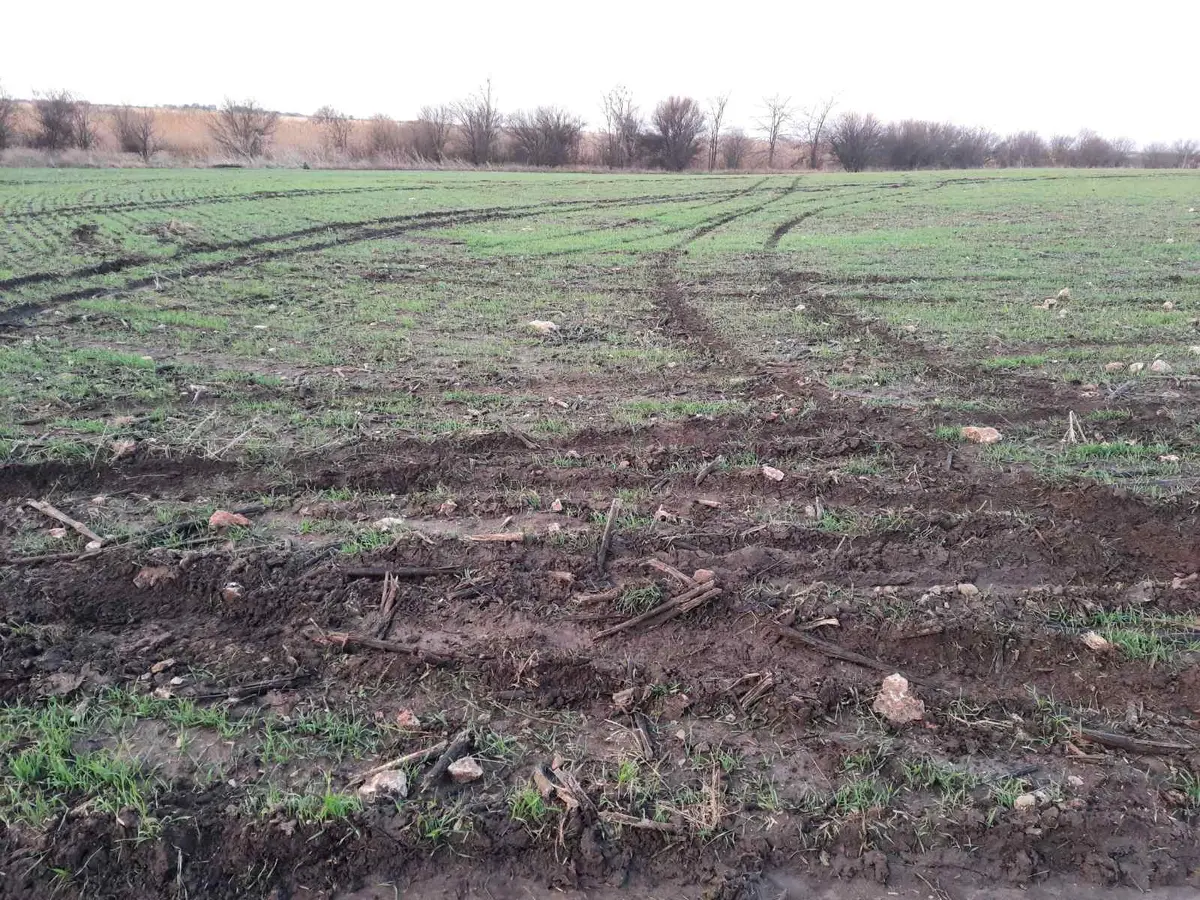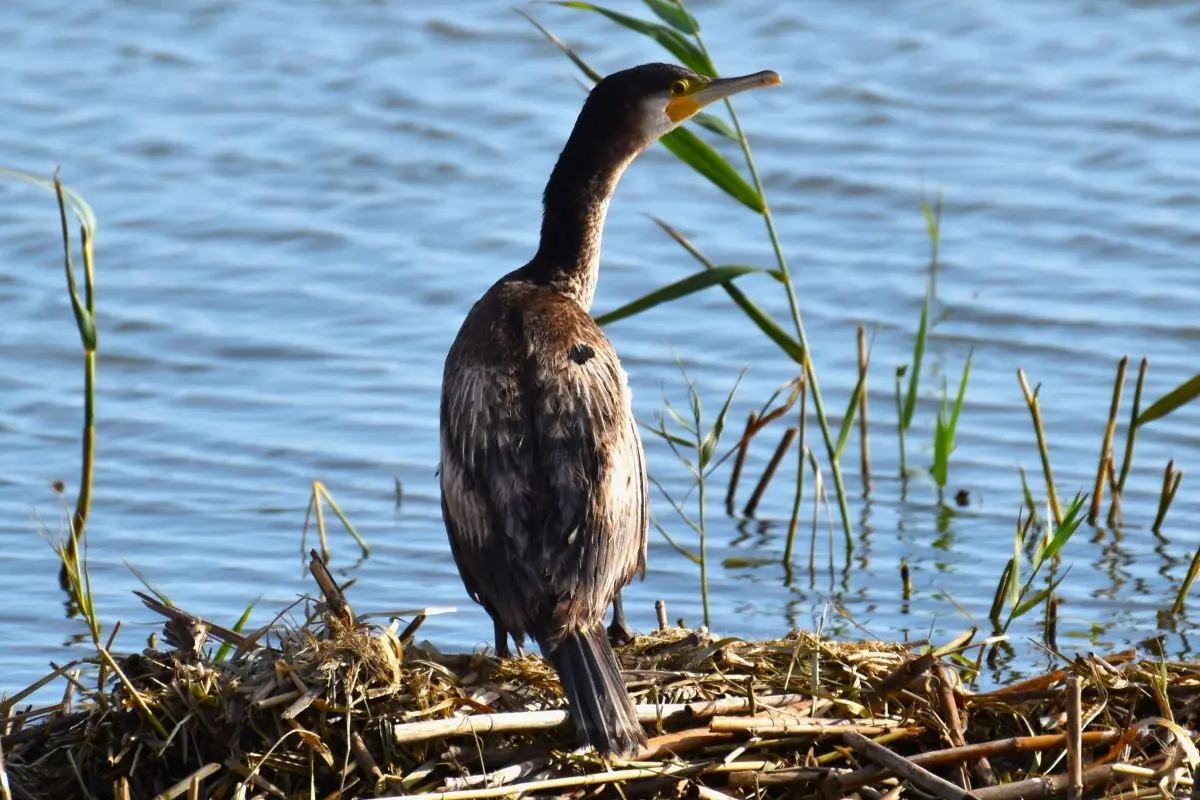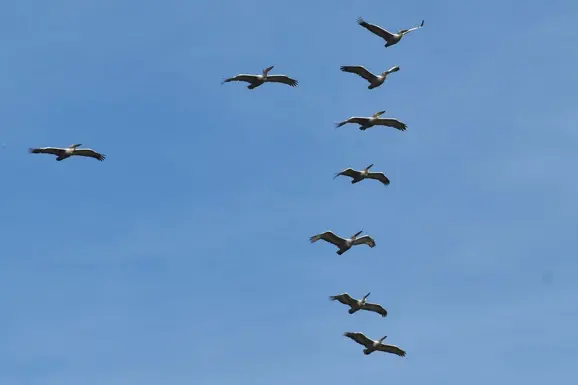
On December 1 and 2, a Green Balkans team visited Coastal Dobrogea and conducted monitoring of the Lakes Durankulashko, Shablensko and Ezeretsko. The season with an increased presence of wintering bird species in our country, including the endangered red-breasted goose, is approaching, and the goal of our team is to track the status and presence of birds here. In recent years, due to changes in environmental conditions because of the climate change, the number of geese wintering on the Bulgarian Black Sea coast has decreased. Therefore, it is important to carry out regular monitoring of suitable habitats, with the aim of monitoring all changes, establishing their causes and determining adequate response activities and measures to support the conservation of endangered species of birds wintering in Bulgaria.
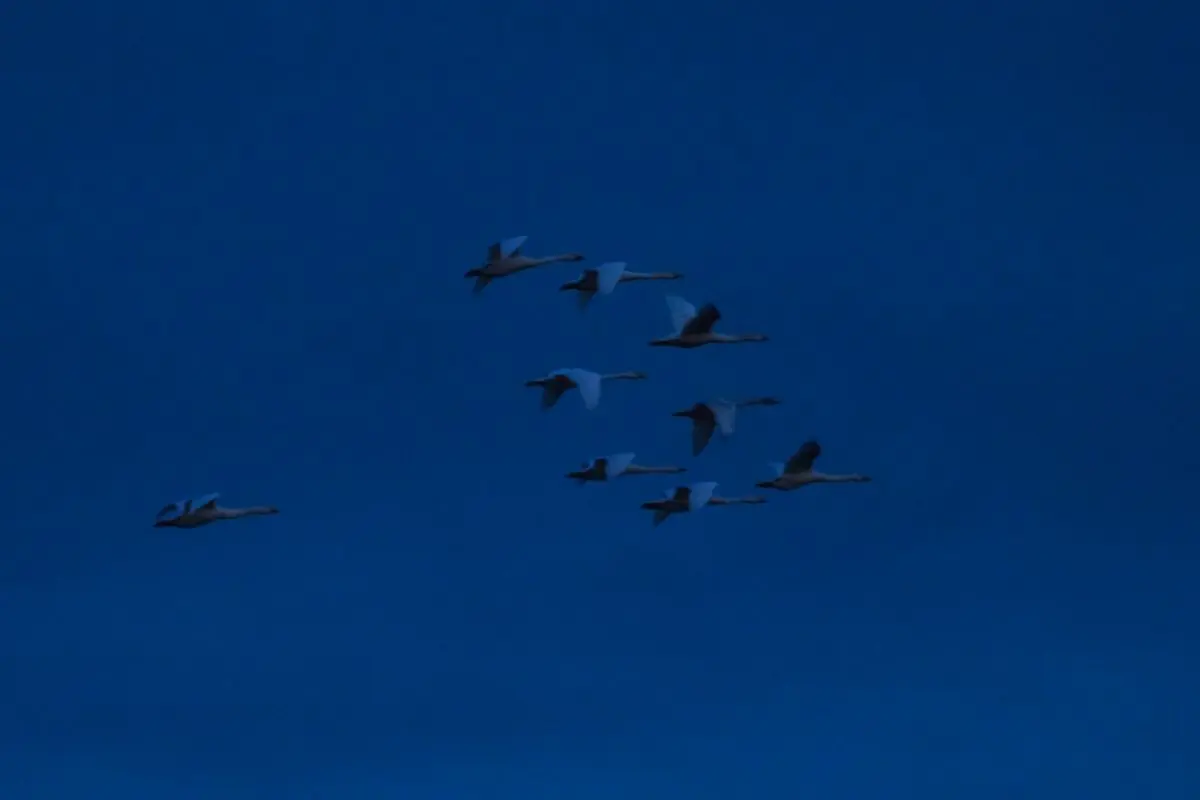
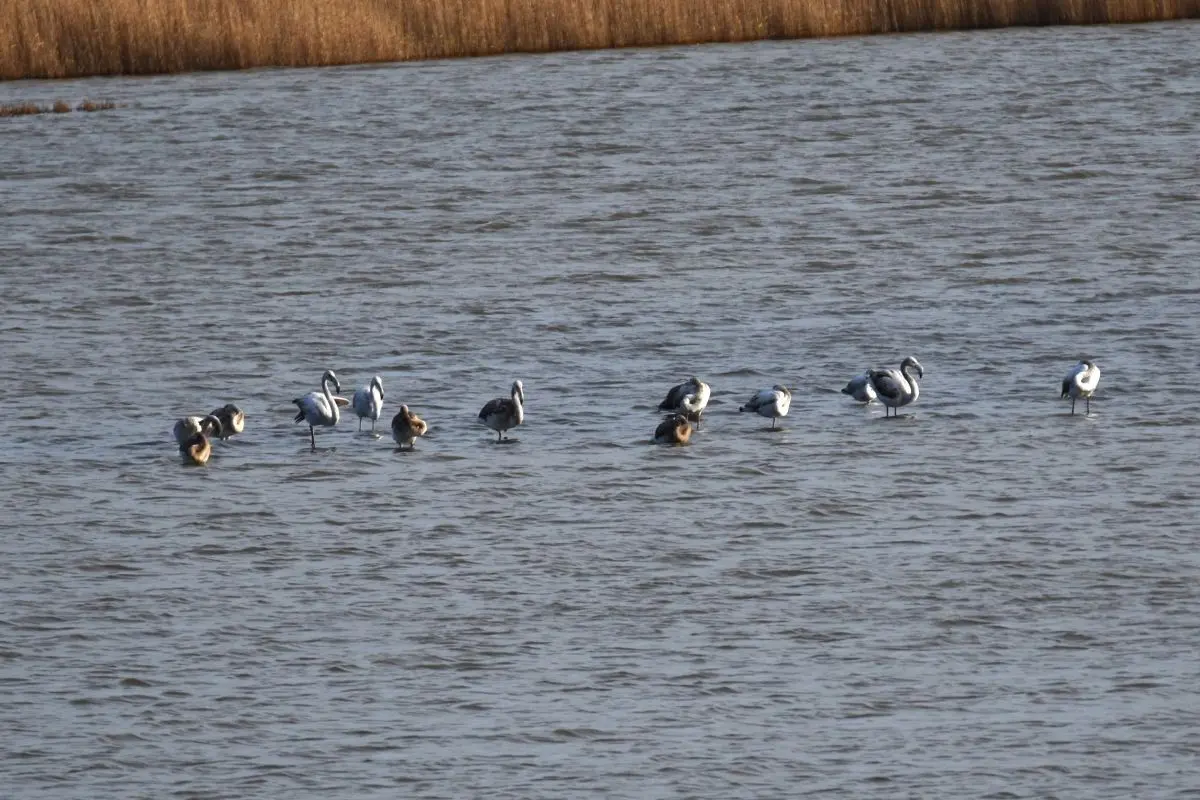
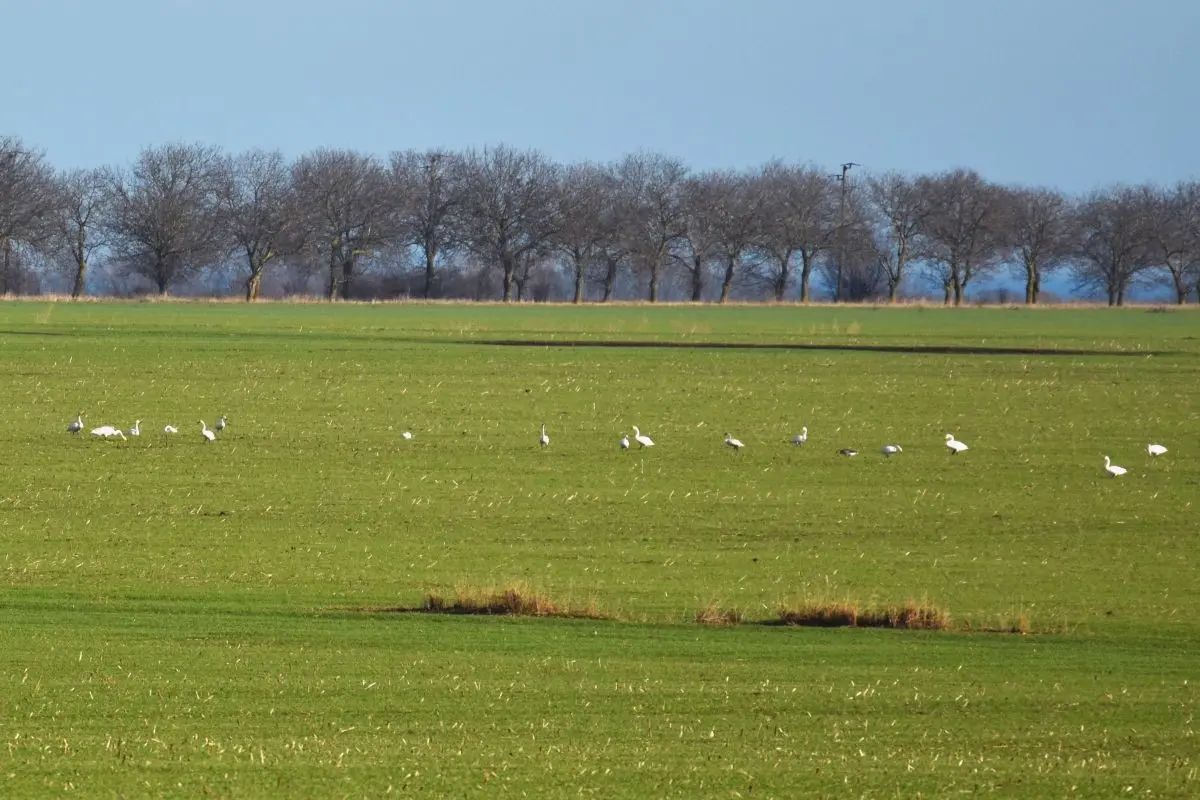
Monitoring in Coastal Dobrogea coincided with a brief warming of the weather, with temperatures reaching 21oC, and the feeling of more summer-like conditions was reinforced by the gusty south-westerly wind. Accordingly, no geese were observed. One of the most interesting sightings was of 14 young individuals of the exotic pink flamingo species in Shablenská Tuzla, and it is very likely that the birds arrived there from the Tuzlovsky limani NP in Ukraine, where there is an established colony of the species. In the fields near the lakes, more than 200 swans were observed feeding - predominantly Whooper Swan, but also a few Tundra Swans - with which a single Great white-fronted goose was also feeding.
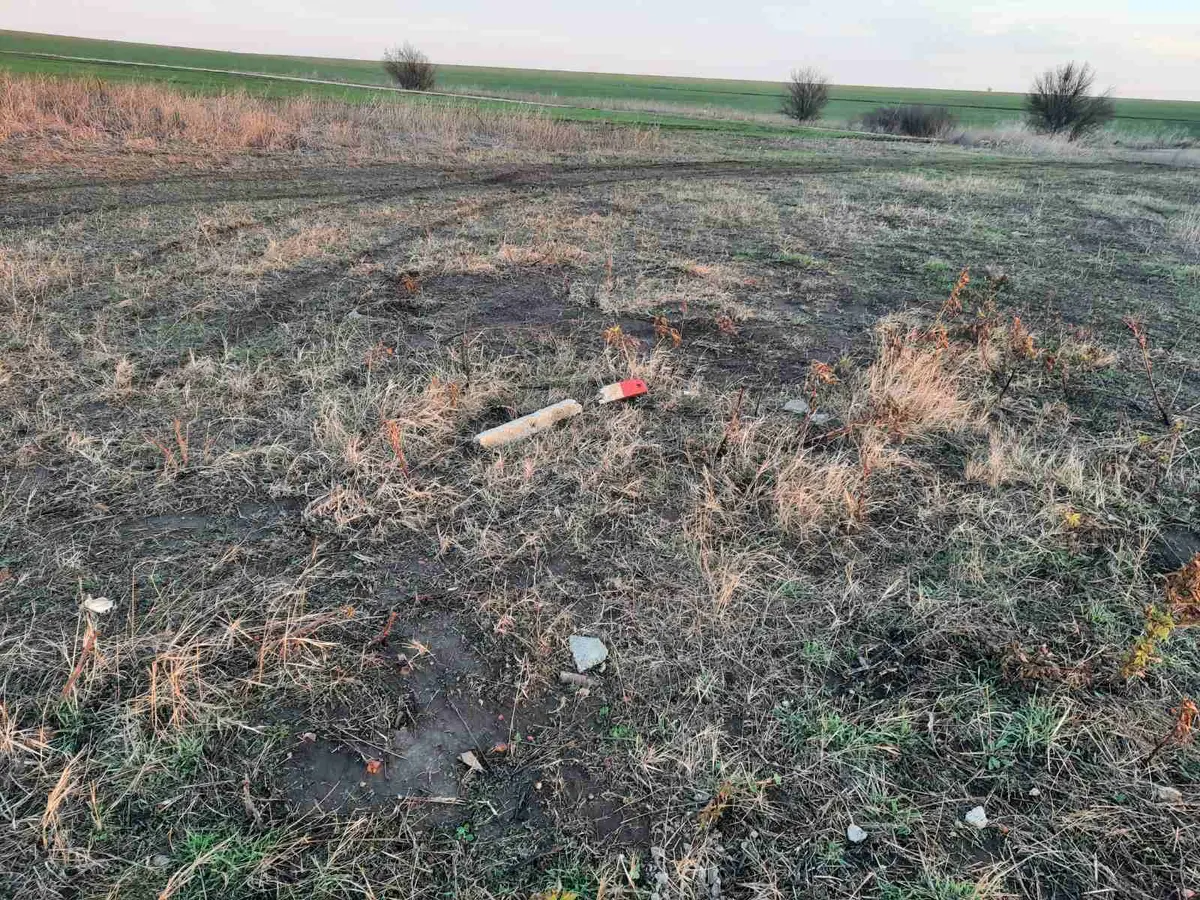
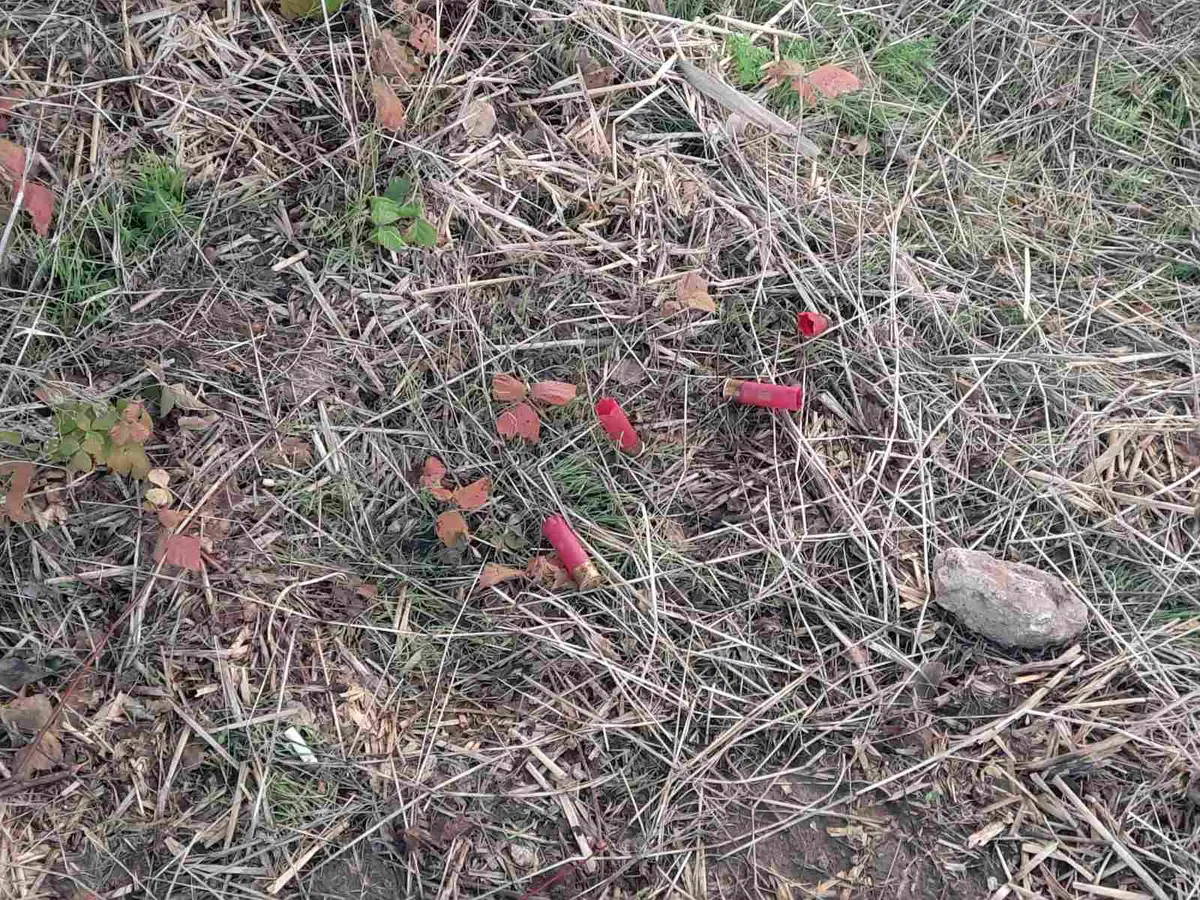
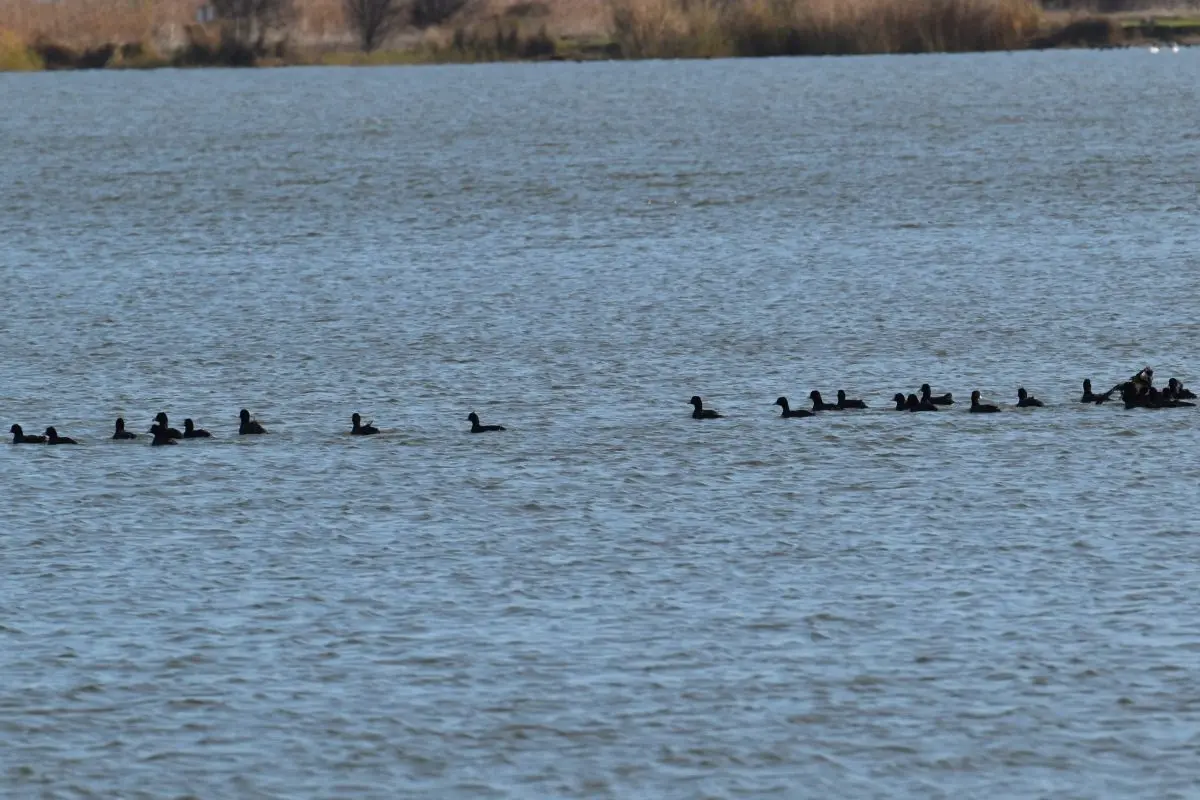
The results show that the period of active migration from the north for waterfowl species is underway. A high number of Teals, over 1,000 individuals, which are in continuous movement, was recorded in Shabla Lake. Birds were observed roosting overnight in the sea. A poaching press was reported for swans and other species roosting in the lake. Between 7:00 a.m. and 7:30 a.m., shots were fired directly from the shore of Ezeretsko Lake, which is in violation of the ban on hunting up to 350 m from the shores of Shablensko Lake, Ezeretsko Lake and Shablneska Tuzla in the period December 1 - January 31, introduced by Order No. RD-698 of August 25, 2020 of the Minister of the Environment and Waters in relation to BG0000156 "Shablenski ezeren kompleks". We would like to emphasize that such behavior causes great disturbance for species resting and feeding in the lake, including visitors from as far away as Siberia such as Whooper and Tundra swans, which inevitably leads to great stress for them. These are birds that have flown thousands of kilometers to get here, and for whom every calorie of energy is key to surviving the cold winter nights and long migration.
Of course, our team continues to monitor the condition of the wintering habitats and keep you informed.
Contacts:
Dimitar Popov – dpopov@greenbalkans.org
Galina Meshkova - gmeschkova@greenbalkans.org
Monitoring in Coastal Dobrogea coincided with a brief warming of the weather, with temperatures reaching 21oC, and the feeling of more summer-like conditions was reinforced by the gusty south-westerly wind. Accordingly, no geese were observed. One of the most interesting sightings was of 14 young individuals of the exotic pink flamingo species in Shablenská Tuzla, and it is very likely that the birds arrived there from the Tuzlovsky limani NP in Ukraine, where there is an established colony of the species. In the fields near the lakes, more than 200 swans were observed feeding - predominantly Whooper Swan, but also a few Tundra Swans - with which a single Great white-fronted goose was also feeding.
The results show that the period of active migration from the north for waterfowl species is underway. A high number of Teals, over 1,000 individuals, which are in continuous movement, was recorded in Shabla Lake. Birds were observed roosting overnight in the sea. A poaching press was reported for swans and other species roosting in the lake. Between 7:00 a.m. and 7:30 a.m., shots were fired directly from the shore of Ezeretsko Lake, which is in violation of the ban on hunting up to 350 m from the shores of Shablensko Lake, Ezeretsko Lake and Shablneska Tuzla in the period December 1 - January 31, introduced by Order No. RD-698 of August 25, 2020 of the Minister of the Environment and Waters in relation to BG0000156 "Shablenski ezeren kompleks". We would like to emphasize that such behavior causes great disturbance for species resting and feeding in the lake, including visitors from as far away as Siberia such as Whooper and Tundra swans, which inevitably leads to great stress for them. These are birds that have flown thousands of kilometers to get here, and for whom every calorie of energy is key to surviving the cold winter nights and long migration.
Of course, our team continues to monitor the condition of the wintering habitats and keep you informed.
Contacts:
Dimitar Popov – dpopov@greenbalkans.org
Galina Meshkova - gmeschkova@greenbalkans.org
.JPG)