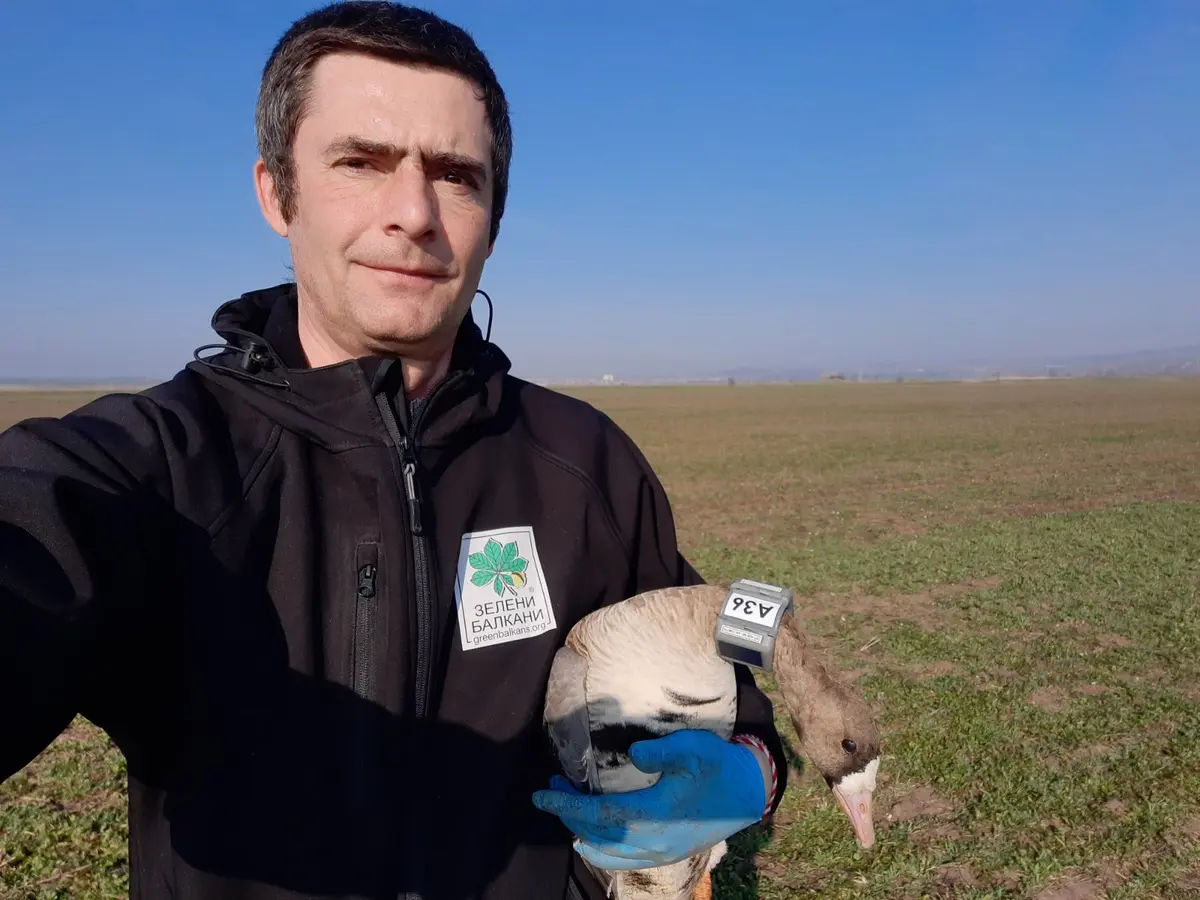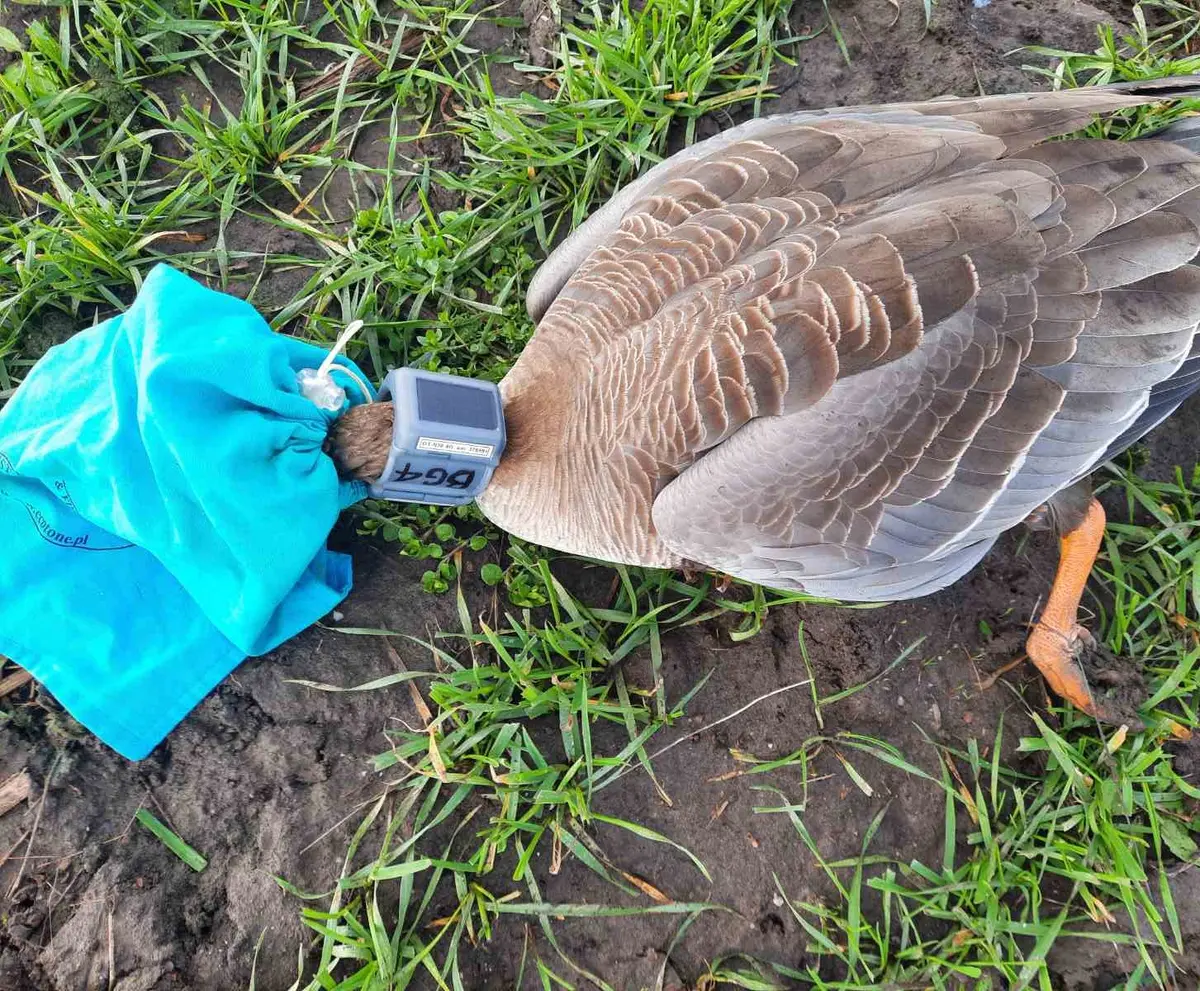
Seven Great white-fronted geese were successfully tagged with GPS transmitters near Burgas, in the Atanasovsko Lake area. The activity was implemented by experts from Green Balkans and is part of the organization’s long-term program for the conservation of the globally endangered Red-breasted goose. Three of the transmitters were provided by Radboud University in the Netherlands, as part of a project studying the differences in migration routes across the North Sea and across Pannonia. So far, data from the Pannonian migration route is quite limited, which makes tagging these individuals very valuable.
The tagging of Greater white-fronted geese plays a key role in better understanding the movements of geese as a whole in the region. The species winters in large flocks along the Bulgarian Black Sea coast and is often found together with the Red-breasted goose. Therefore, tracking the more numerous species helps scientists gather important information about the behavior, migration routes, and feeding grounds of mixed flocks, which also include the rarer Red-breasted geese.
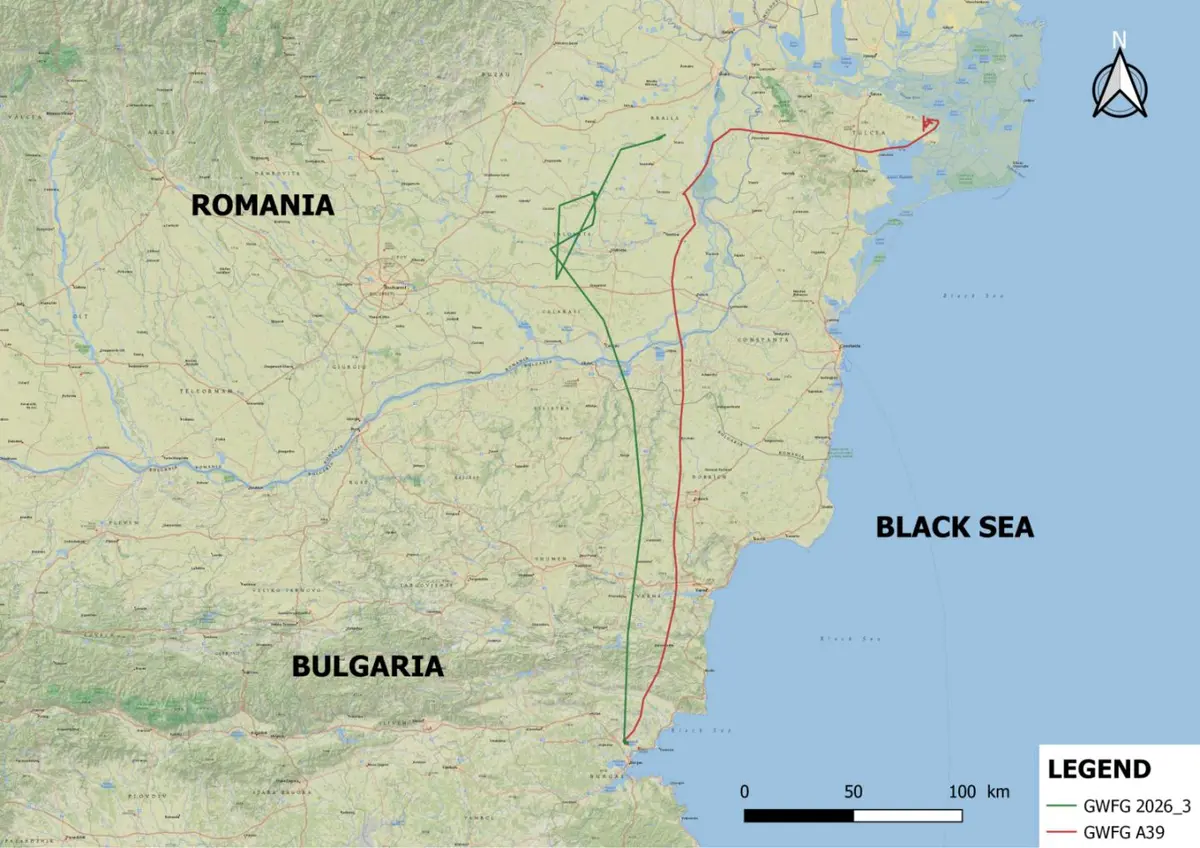
The first data from the GPS transmitters are already yielding interesting results. Two of the tagged geese have started their spring migration north and are currently in Romania. They are expected to continue their journey in the coming weeks, which will take them to their breeding grounds beyond the Arctic Circle in early summer.
Satellite tracking of birds allows conservationists to receive real-time information about migration routes, resting places, and potential risks that birds encounter along their way. The collected data is extremely valuable for planning conservation measures for both wintering geese in Bulgaria and populations along their entire migration route.
The Atanasovsko Lake area is one of the most important wintering areas for waterfowl on the western coast of the Black Sea, and in recent years has also been a key area for monitoring and conservation of migratory geese.
Green Balkans experts will continue to monitor the movement of the tagged birds, expecting the remaining geese to head north to their breeding territories in the coming weeks.
The tagging of Greater white-fronted geese plays a key role in better understanding the movements of geese as a whole in the region. The species winters in large flocks along the Bulgarian Black Sea coast and is often found together with the Red-breasted goose. Therefore, tracking the more numerous species helps scientists gather important information about the behavior, migration routes, and feeding grounds of mixed flocks, which also include the rarer Red-breasted geese.
The first data from the GPS transmitters are already yielding interesting results. Two of the tagged geese have started their spring migration north and are currently in Romania. They are expected to continue their journey in the coming weeks, which will take them to their breeding grounds beyond the Arctic Circle in early summer.
Satellite tracking of birds allows conservationists to receive real-time information about migration routes, resting places, and potential risks that birds encounter along their way. The collected data is extremely valuable for planning conservation measures for both wintering geese in Bulgaria and populations along their entire migration route.
The Atanasovsko Lake area is one of the most important wintering areas for waterfowl on the western coast of the Black Sea, and in recent years has also been a key area for monitoring and conservation of migratory geese.
Green Balkans experts will continue to monitor the movement of the tagged birds, expecting the remaining geese to head north to their breeding territories in the coming weeks.